CS2 Highlight Charms: A Collector's Guide to Cologne 2026 Moments
Understand IEM Cologne 2026 Highlight Charms in CS2: how the moment-based collectibles work, what differentiates them and how to research the market responsibly.
Understand IEM Cologne 2026 Highlight Charms in CS2: how the moment-based collectibles work, what differentiates them and how to research the market responsibly.
A player-first guide to the July 2026 CS2 update, including Premier Season 5, Cache replacing Overpass, revised C4 damage and Armory changes.
Budapest Major 2025: What to Expect from CS2's Evolution The Budapest Major 2025 (starting November 24, 2025) represents an important milestone in CS2's competitive history. This guide analyzes what we can expect based on historical Major patterns and CS2's ongoing development. ⚠️ DISCLAIMER This article provides educational analysis based on historical CS2 Major patterns and general esports trends. All information is for educational purposes only. Specific tournament outcomes,

Abhijeet Kulkarni
Author
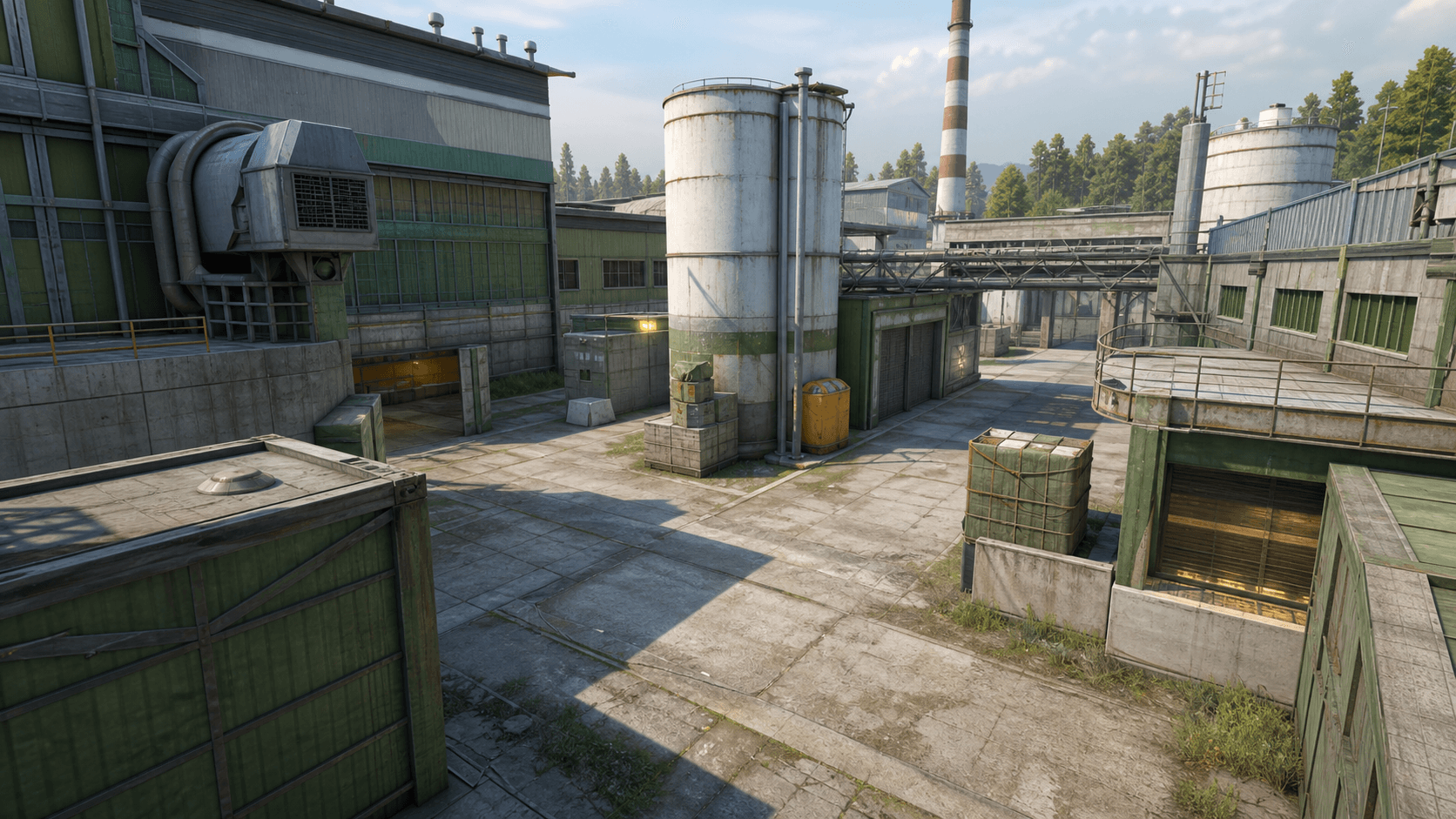
Cache is back where it changes matches, not just memories. Valve added it to the Active Duty pool in the July 2026 CS2 update, replacing Overpass for Premier Season 5. If your last serious Cache game was in CS:GO, you have an advantage, but not a complete plan.
The layout still rewards the habits that made Cache popular: purposeful mid control, quick rotations and simple utility used at the right moment. The mistake is assuming recognition equals readiness.
This guide is built around decisions rather than a wall of labels. You will learn how the map connects, which calls need to be precise and how to turn thirty minutes in a private server into something your next team can actually use.
Cache is a compact defusal map where control of mid changes how safely and quickly both teams can move between A and B.
That does not mean every round must become a five-player mid fight. It means both teams need a deliberate answer for mid. Taking it, contesting it, watching it or giving it up can all be valid. Drifting into a decision is not.
Mid is valuable because it creates choices. Terrorists can pressure rotations and split either site. Counter-Terrorists can contest information, threaten a boost or fall back into crossfires.
Your first practice goal is not winning every mid duel. It is knowing what each piece of information permits. If the mid player sees nothing, what can the A anchor safely do? If the Terrorists gain central control, which route becomes vulnerable first? Those questions produce better rotations than a call of "mid somewhere."
Useful mid calls should identify both location and direction. "One mid" is incomplete. "One top mid moving boost" gives teammates a position, a likely destination and a reason to adjust.
A rounds often fail because the first player clears everything while the second player watches the first player. Assign clearing responsibility before the execute.
The entry pair should know which close positions are theirs. The support player should know whether utility is isolating the site, delaying a rotate or enabling a plant. The lurker should know what timing makes the pressure useful instead of late.
On defense, avoid treating the anchor as a statue. The A player must understand when mid information allows a more active angle and when a lost central area demands patience.
B punishes half-committed entries. Narrow approaches make spacing visible: if the first player clears alone and the second cannot trade, defenders get several separate fights instead of one coordinated hit.
Build the round backward from the plant. Which defender positions must be cleared? Which rotation path needs to be delayed? Where will the team stand after the bomb goes down? If those answers are missing, another smoke lineup will not save the execute.
Callouts vary by region and team, but their purpose does not. A good call lets a teammate act without asking a second question.
Organize your vocabulary around routes and functions:
Your team may use a different label for a specific object. Agree on the label once, then keep it stable. Consistency is more valuable than winning an argument over the "correct" regional term.
Avoid three common communication failures:
Run from each spawn toward the first contested area. You are learning timing ranges, not hunting for a perfect spawn script. Note where an opponent can reasonably appear before you.
Practice one way to take mid and one way to contest it. Use only the utility required for the idea. If the sequence needs six grenades and four perfect throws, simplify it.
Choose a basic A split and a basic B hit. Assign the first three clearing responsibilities and the post-plant positions before running the execute.
Start from each anchor position and rotate on different information. Compare the fastest route with the safest route. They will not always be the same.
Add opponents, a timer or a score. Mechanics behave differently when you are rushed. Your goal is to preserve the plan after the first thing goes wrong.
Train clearing order and stopping accuracy. The route should let your crosshair arrive before your eyes begin searching. Record where you repeatedly make large corrections; those are the angles your path is not preparing for.
Measure distance in time, not meters. You must be close enough to trade but far enough that one spray or grenade does not remove both players. Practice following the same entry at different speeds.
Attach every grenade to a teammate action. "This smoke lands" is not a complete plan. "This smoke gives our entry a single site fight" is.
Practice the exit from each opening angle. Cache offers attractive sightlines that become traps after a missed shot. Decide where you are moving before the duel begins.
Build a default that produces information and preserves utility. Your first three calls should be understandable to a mixed team, not dependent on a professional playbook.
The biggest change is competitive consequence. Earlier 2026 Cache articles correctly described a map returning to CS2 while still outside Premier. That information became stale on July 8. Cache now sits in Active Duty, and Overpass is out.
This matters for search as much as play. A current Cache guide should answer the question players have now: not "is it coming?" but "how do I get ready before the queue punishes me?"
The planned vSports workflow is designed around the gap between reading and repetition: launch a private practice server, choose a Cache routine, run Prefire or Retake scenarios and send the session into vFrag for review. The product is still planned for the November 2026 launch, so this guide does not pretend those tools are available today.
Until then, use an offline or community server and keep the process small enough to repeat. A reliable five-line practice notebook beats a beautiful guide you never open again.
Yes. Cache joined Active Duty for Premier Season 5 on July 8, 2026. Overpass left the pool in the same update.
The core identity and route logic remain recognizable, but CS2 presentation, clipping and current competitive context matter. Returning players should walk the map before relying on old timing and utility memory.
Learn how mid connects the map, then build one simple attack for each site and one defensive rotation rule. Add utility after those decisions are clear.
No. It is a decision and practice guide. Pair it with our broader CS2 map callouts guide, and agree on any regional naming differences with your team.
Interactive Cache notebook
Can your team take or deny mid without spending every grenade?
Get the latest CS2 news, Major updates, and trading insights delivered directly to your inbox.
